The Hidden Weight
Defeating Bloat, Inflammation, and The Wet Sponge
There is a specific morning that ends a lot of diets.
You spend three days eating perfectly. You track your protein, hit your water target, and go to bed early. You wake up on the fourth morning, step on the scale, and the number is up 2 kg (4 lbs).
The Elephant (your Primal Brain) instantly panics. It screams, "This is broken! We are starving for nothing! Let's just quit and eat." And the diet ends.
Before you slash your calories or run to the treadmill, engage The Rider and look at the physics. To gain 2 kg (4 lbs) of pure body fat overnight, you would have had to consume roughly 15,000 extra calories above maintenance while you slept. You did not eat thirty cheeseburgers in your sleep. Therefore, you did not gain fat.
What you are looking at is water.
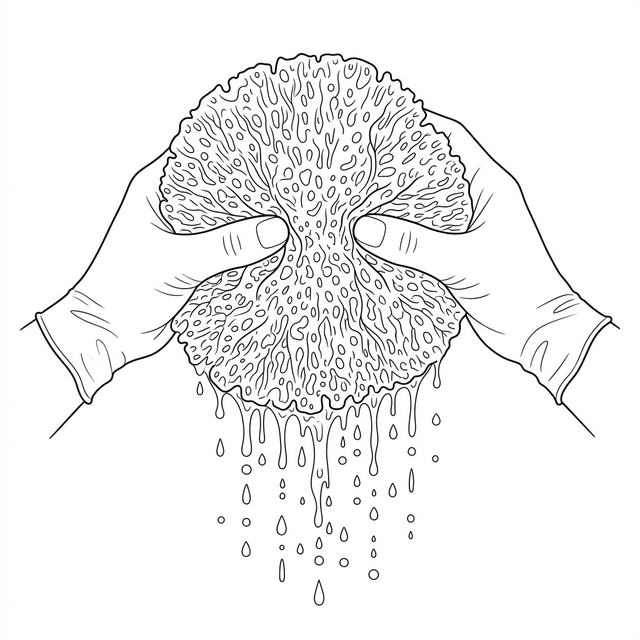
Your body operates like a highly reactive, living sponge. Stress, salt fluctuations, hormonal shifts, sleep deprivation, or a hard workout will cause that sponge to soak up fluid to protect your cells. When the internal chemistry settles, the body wrings the sponge out and the fluid leaves naturally.
Understanding Water Weight (Edema): Water retention is extra fluid temporarily trapped in the spaces between your cells (interstitial fluid) or bound to carbohydrates stored in your muscles. It makes you heavier on the scale and puffier in the mirror. It is not adipose tissue.
- A dry sponge is lighter and tighter.
- A wet sponge is heavier, swollen, and soft. It is the exact same sponge. Your fat mass did not change; only the water volume changed.
True fat loss is a slow, structural biological process. Fluid shifts are fast and volatile.
- Glycogen: When you eat carbohydrates, your body stores them in muscle as glycogen. Every gram of stored glycogen binds to 3 to 4 grams of water. A heavier carb meal wets the sponge.
- Stress: High cortisol from a bad day at work causes the body to hoard sodium and water.
- Muscle Repair: A new workout causes micro-tears in muscle tissue. The body sends fluid to the area to drive healing. You will weigh more the day after a hard session precisely because you are adapting.
The Unified Tracking System: Because The Wet Sponge fluctuates daily, weighing yourself every morning and reacting to the number is reading noise, not data.
From this point forward, the scale loses its ability to cause panic. You will use one unified system for the rest of this journey:
- 1. DAILY (Execution): The Single Daily Win. Every night, you track your behavior. Did I execute the plan? Yes / Not yet. There is no daily weigh-in.
- 2. WEEKLY (The Scale): The Weekly Average. Weigh yourself exactly three mornings a week (e.g., Monday, Wednesday, Friday) - after the bathroom, before eating. Write the numbers down and attach zero emotion to them. On Sunday, add the three numbers and divide by three. That is your Weekly Average. You never react to a single day. You compare Weekly Averages to Weekly Averages. The math flattens the water spikes.
- 3. MONTHLY (The Body): The 4-Week Review. Every four weeks, take progress photos and a waist measurement. The scale measures gravity; the tape measures fat.
If the scale jumps tomorrow, you do not panic-starve. You hydrate, return to your rhythm, and let the Weekly Average do its work.
For decades, we have been told to fear salt - treated as a toxic additive that causes bloating and ruins progress.
Biology views it differently. Salt is not a flavor profile; it is an electrical conductor. Every thought in your brain, every muscle contraction, and every heartbeat relies on the electrical charge generated by sodium and potassium.
When it comes to water retention, salt is not your enemy. Inconsistency is. Push sodium too high or drop it too low, and your body panics and holds onto water to protect its electrical grid.
The Mechanics of the Bloat:
- Too Much Salt: A massive salty meal spikes blood sodium. To prevent osmotic shock, your body pulls water into your tissues to dilute it. You wake up with puffy fingers, sock marks on your ankles, and a heavier scale.
- Too Little Salt: Aggressively cutting salt to "lose weight" triggers a perceived lethal drop in blood volume and electrical capacity. The body releases aldosterone, forcing your kidneys to hoard every trace of sodium and water they can find. You still bloat - but now you also have a headache, deep fatigue, and no energy to train.
The goal is not to eliminate salt. The goal is to pick a predictable lane and stay in it, so your body knows it is safe to let water flow through you rather than cling to you.
Your Biological Targets:
- Sodium: Aim for a steady 3,000 to 5,000 mg per day (unless instructed otherwise by a doctor).
- (Note on math: Sodium is not the same as table salt. Table salt is roughly 40% sodium. To hit 4,000 mg of sodium, you need approximately 10 grams of total table salt across your day.)
- Hydration: Drink 1.5 to 2.5 liters (50-85 fl oz) of water daily. Water is the river that flushes the system; if the river runs dry, the body builds a dam.
The trap is rarely the salt shaker on your table. It is ultra-processed food and restaurant meals, which hide massive, unpredictable sodium loads. Two heavily salted takeout meals back-to-back can trap 1.5 kg (3 lbs) of water by morning.
If you eat out and hit a sodium bomb, accept the temporary water bump. Increase your fluids, take a walk, and return to your normal lane at the very next meal. No drama.
Sometimes the mystery weight that refuses to move is not salt or glycogen. It is inflammation from your immune system quietly fighting your food.
When your digestive system is chronically irritated by a food it cannot process efficiently, it triggers a low-grade immune response. Inflammatory mediators like histamine cause blood vessels to dilate and leak fluid into surrounding tissues (capillary permeability). That systemic inflammation causes the body to hold protective fluid - stiff joints, plummeting energy, and a deeply bloated stomach.
Allergy vs. Intolerance:
- Allergy (IgE Response): Fast, aggressive, and dangerous - hives, throat swelling. Requires medical care and total avoidance.
- Sensitivity/Intolerance (IgG / Enzyme Deficiency): Delayed and low-grade. You lack the enzymes to digest the food efficiently. It shows up as brain fog, stiff joints, "water weight," and severe bloating 12 to 48 hours later. Annoying and highly disruptive to fat loss, but rarely dangerous.
Common culprits include heavy dairy (lactose/casein), gluten-heavy refined grains, deep-fried oils, and highly processed artificial sweeteners. Alcohol is not a gray area - it is one of the most potent drivers of systemic inflammation and sleep destruction in the modern diet, and it has no place in this framework at any stage.
You do not need an expensive blood test to find your triggers. You need quiet chemistry.
When you adopt the nutritional baseline in this book - mapped out in Chapter 5 and executed in Chapter 8 - you eat simple, single-ingredient proteins, complex carbs, and vegetables. That naturally removes most highly processed inflammatory triggers. Sticking to the clean, rhythmic meals of your daily plan gives your gut the time it needs to heal.
Once your Weekly Average stabilizes and your stomach feels consistently flat, you can reintroduce a suspected food and watch the feedback. If you wake up puffy and exhausted, you have found a biological friction point. You do not have to ban it forever - but you now know exactly what it costs you.
If water weight is the puddle in the street, your lymphatic system is the city's underground drainage network.
The lymphatic system collects excess fluid, metabolic waste, and immune byproducts from your tissues, filters them through your lymph nodes, and returns them to your bloodstream to be cleared.
The health and fitness industry makes millions selling "detox teas" and "cleanses" to flush this system. To be biologically precise: you do not need a detox tea. Those products are aggressive laxatives wrapped in clever marketing. You have a liver and two kidneys, and they are the most advanced detoxification system on earth.
What your lymphatic system actually needs is circulation.
The Mechanical Catch: Unlike the cardiovascular system, the lymphatic system has no heart to pump it. It relies entirely on the mechanical squeezing of skeletal muscles and the deep expansion of your lungs to push fluid upward against gravity. When you sit at a desk for nine hours, your drainage system is physically turned off. Fluid pools in your legs and lower abdomen. You take your shoes off at 6:00 PM and your ankles are swollen.
How to Turn the Pump On:
- Walking (The Primary Pump): Walking is the most effective lymphatic pump available. It requires no recovery and forces rhythmic contractions in your calf muscles, pushing fluid upward. This is why daily steps are a non-negotiable biological requirement - not just a way to burn calories.
- Deep Diaphragmatic Breathing: Slow, deep belly breaths change the pressure in your chest cavity, creating a vacuum that pulls lymph fluid up through the torso.
- The "Valve" Motions: If you are stuck at a desk, do 20 calf raises, ankle circles, and shoulder rolls every two hours. You are manually flushing the pipes.
(Note: During your first month on this program, your only job is fixing your food rhythm and walking. Do not add intense gym sessions yet. Walking is the only pump you need right now.)
When you begin the core nutrition protocol in this book, your body will undergo a rapid, significant shift in the first 14 days.
This is not a separate "two-week cleanse." It is simply the biological reality of what happens when you stop feeding your body chaos. A steady eating rhythm, consistent protein targets, adequate water, and a predictable sodium lane turn off the biological alarms.
The 14-Day Physical Shift:
- 1. Insulin Flatlines: Without constant grazing on sugar or large carbohydrate loads, insulin levels stay calm and low.
- 2. The Flush: Low insulin signals the kidneys to stop hoarding sodium. The body begins rapidly excreting the inflammatory water it has been holding for months.
- 3. The Drop: Your Weekly Average will likely fall sharply in the first two weeks. Your rings will fit looser, your face will look sharper, and your ankles will feel lighter.
Do not mistake this initial drop for pure fat loss. You are wringing out The Wet Sponge. You are clearing the lymphatic traffic jam.
Once the excess water is gone, the scale will slow down. That is exactly what is supposed to happen. The water is gone; now the true, methodical process of fat oxidation begins. Do not panic when the rapid loss stops. Shift your focus to the quiet, daily rhythm. The real work has just started.