Social Headwinds
Navigating Pressure & Protecting Your Progress
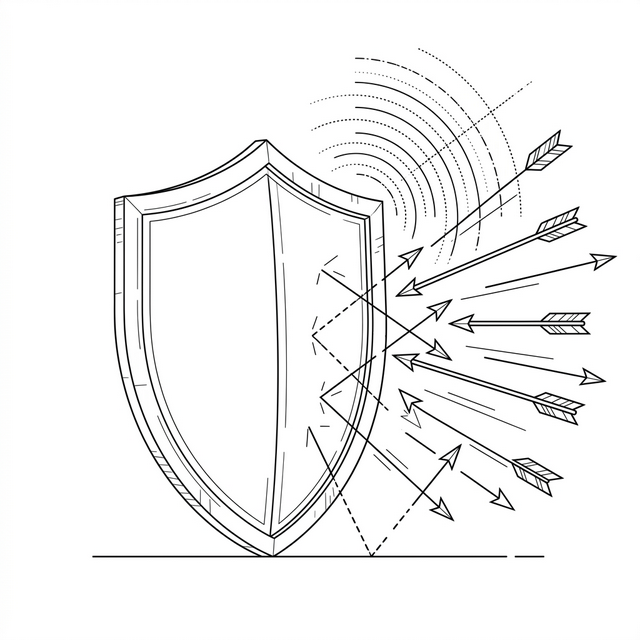
Up until this point, we have treated your transformation as a quiet, isolated biological experiment between you, your kitchen, and your calculator. But you do not live in a vacuum. You live in a profoundly social world constructed almost entirely around food.
When you lock your rhythm - when you start eating your Anchor (protein) every three hours and drinking your water - something deeply uncomfortable is going to happen. The people closest to you are going to push back.
It will start quietly: "Come on, live a little. It's Friday." "You're fine exactly the way you are. Don't get obsessed." "Just one slice won't kill you."
When you hear this, it is tempting to feel attacked - like your friends and family are actively trying to sabotage you. But if you go to war with your environment, your cortisol will spike, your Rider will exhaust itself, and you will eventually surrender just to make the tension stop.
Look at the room with cold, stoic empathy. The truth is much messier, and far more human.
The Elephant's Terror of Rejection. It is not because you lack willpower that it feels agonizing to say no to a slice of cake at a birthday party. It is because of your Elephant. For millions of years, human survival depended entirely on the tribe. Sharing food is the oldest, most powerful way humans signal belonging and safety. When someone offers you food and you refuse it, your Elephant experiences a spike of biological terror - it reads the refusal as a risk of tribal expulsion. You are not weak for wanting to cave in; you are experiencing the friction between your modern goals and your deep survival wiring.
Status Quo Shock (Why They Push). Your new rhythm quietly signals, "Things are different now." Shared rituals - Friday night pizza, bottomless brunch, office donuts - are little micro-cultures. When you step out of that ritual, it feels to others like you are walking away from them, not just the food.
More importantly, your disciplined effort acts like a mirror. If a friend has been quietly avoiding their own health, your progress forces them to look at their own stagnation. Your consistency makes their Elephant uncomfortable. It is psychologically much easier for them to pull you back into old habits than to confront their own reflection.
They are trying to protect the old version of you, not realizing that the old version was heavy, exhausted, and hurting.
Frame it correctly: their pushback is about their habit, their fear, and their need for belonging. It is not a verdict on your decision. You do not need to argue with them. You just need to hold the line.
Not all pushback is the same. Some of it is misinformed love; some of it is control. Mix them up and you will either argue aggressively with someone who genuinely cares about you, or yield your boundaries to someone who does not respect them.
Learn to tell the difference.
1. Hyper-Concern (Clumsy Love)
- The Signal: A worried, soft, sometimes anxious tone. They are projecting their own fears onto you.
- Sounds like: "I'm scared you're being too strict. Are you eating enough?" or "I miss our Friday dinners. Can we find something that still works for you?"
- The Response: Validate their care, clarify your boundary, and collaborate. "I appreciate you looking out for me. I am following a biological rhythm that is finally helping me sleep and keeping my energy steady. Let's pick a coffee shop next week where I can stay on track and we can still hang out."
2. Manipulation (Guilt, Shaming, Control)
- The Signal: Needling, mocking, dismissive - or aggressively sweet with a hook. The motive is your compliance, because your compliance makes them feel better about themselves.
- Sounds like: "Don't be that person. You're no fun anymore." or "After everything I cooked? If you loved me, you'd eat it."
- The Response: Name the boundary calmly, state it exactly once, and exit if necessary. "I am not okay with guilt trips about my health. I am sticking to my plan tonight."
The Diagnostic Test: Hyper-concern accepts your boundary after one clear explanation. Manipulation escalates the moment you set one. If they attack your character or mock your choice, it is manipulation. You owe them zero explanations.
You do not need twenty responses for every possible social scenario. You need one unbreakable formula that holds your boundary without over-explaining your biology to people who are not listening.
The Golden Rule: Never J.A.D.E. Never Justify, Argue, Defend, or Explain. The moment you try to explain your Protein Anchor or your caloric deficit to your aunt at a dinner party, you have entered a negotiation. You have signaled that your choices are up for debate. They are not. The Elephant loses negotiations. Boundaries are statements.
The ABC Formula
- Acknowledge - Show appreciation or warmth. Defuses tension.
- Brief Boundary - State your line clearly and shortly. Closes the negotiation.
- Change the Topic - Immediately redirect the Spotlight.
Scenario 1: The Office (Donuts in the breakroom)
- Coworker: "Come on, one donut won't kill you."
- You (ABC): "They smell great, thank you [A]. I'm passing this time [B]. Did you finish that report for the meeting later? [C]"
Scenario 2: The Dinner Party (Host offers dessert)
- Host: "You have to try this pie, I made it just for you."
- You (ABC): "It looks absolutely amazing, thank you [A]. I am completely full and sticking to my rhythm tonight [B]. Tell me about your new project at work - how is it going? [C]"
Scenario 3: The Mother's Guilt Trip
- Mother: "But I cooked your favorite! If you don't eat it, I'll be so insulted."
- You (ABC): "Mom, I love your cooking, and I appreciate the effort so much [A]. I am completely full, but I am taking a large portion home in a container so I can actually enjoy it tomorrow [B]. Tell me what happened with your neighbor? [C]"
Notice the psychological judo in Scenario 3: you accept the love, you praise the effort, and you completely control the calorie consumption. You aim their Spotlight away from your plate and back onto them.
(Note: If someone persists and asks you three times, escalate to a flat, emotionless stop: "I have already said no, and I am keeping my word to myself. Let's change the subject.")
A holiday dinner or a large social event is the ultimate stress test. The environment is chaotic, the food is engineered to hit the Bliss Point, and the triggers are everywhere.
If you walk in starving, relying on the Rider's willpower to resist the buffet, you will lose. The Elephant will smell the sugar, hijack the Spotlight, and you will eat until you are sick. You survive the chaos with a preemptive biological strike.
1. The Pre-Game Anchor. Never arrive at a holiday dinner hungry. Two hours before the event, eat a dedicated meal built heavily around your Anchor (protein) and fiber. When your stomach is physically stretched by protein and water, hunger hormones are chemically suppressed. You walk in physically full. The Elephant is asleep. The Rider can now look at the buffet logically rather than with primal desperation.
2. The One-Plate Rule. Do not graze. Grazing is how the brain loses track of calories entirely. Take exactly one plate. Fill half with whatever protein and vegetables are available. Fill the other half with the specific, traditional foods you actually want to taste - the ones worth it to you. Sit down. Eat slowly. When the plate is empty, you are done.
3. The Day After (No Penance). If the plan goes sideways - if the Elephant wakes up and you eat three slices of pie - do not panic. Do not wake up the next morning and run for two hours to burn it off. Do not starve yourself. Punishment spikes cortisol, which tells the body to hold onto water weight even longer.
Wake up, drink 500 ml (17 fl oz) of water, and eat your next scheduled Protein Anchor exactly on time. Resume the 2.5 to 3-hour rhythm. Let the Wet Sponge wring itself out over the next 48 hours, and watch the Weekly Average.
A single chaotic meal does not destroy a biological system. Quitting the system does.
You cannot control how your aunt reacts to your diet. You cannot control the donuts in the office breakroom. But you have absolute control over the environment you silently curate around yourself.
Willpower is finite. Environment is absolute.
If your inner circle normalizes ordering takeout at 10:00 PM and complaining about their weight, your brain will drift that way. If your circle normalizes prepping protein, walking after dinner, and holding firm boundaries, your brain will subconsciously adopt those as the new normal.
- Shift the Venue: If a friendship revolves entirely around drinking and heavy dinners, change the arena. "I'm skipping heavy dinners right now, but let's grab a coffee and walk the park on Saturday." If they refuse to see you outside of a bar, that is a data point about the friendship, not your diet.
- Mute the Noise: Open your phone right now. Unfollow every account that triggers scale anxiety, sells magic fat-burners, or posts hyper-palatable food content that wakes your Elephant up. Replace them with accounts that teach calm, boring, stoic habits.
Your environment does half the heavy lifting for you.